
The textile industry is one of the most competitive and fast-paced manufacturing sectors, where efficiency, quality, and cost control directly determine success. In such a demanding environment, continuous improvement is not just an option but a necessity. This is where the concept of Kaizen plays a vital role.
A kaizen workshop for textile industry helps organizations understand how small, consistent improvements can lead to significant productivity gains over time. Instead of large, expensive changes, Kaizen focuses on practical, daily improvements involving all employees—from operators to top management.
With rising global competition, increasing customer expectations, and pressure to reduce production costs, textile manufacturers are actively adopting lean methodologies. A kaizen workshop for textile industry introduces practical tools that can be immediately implemented on the shop floor to improve efficiency and reduce waste.
About the Kaizen Awareness Session & Workshop
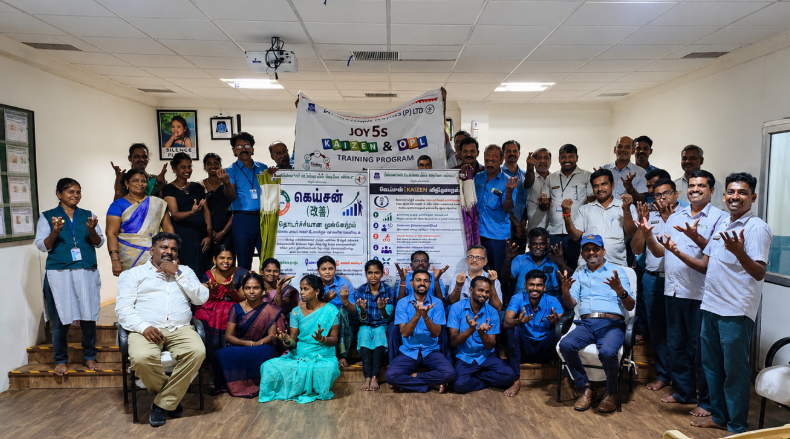
This Kaizen Awareness Session and Workshop is specially designed for professionals in the textile sector, including operators, middle management, and top management teams. The main objective is to create awareness and hands-on understanding of continuous improvement practices.
A well-structured kaizen workshop for textile industry ensures that every participant understands their role in improving productivity. Operators learn how to detect minor inefficiencies, while managers gain insights into optimizing workflows and eliminating process bottlenecks.
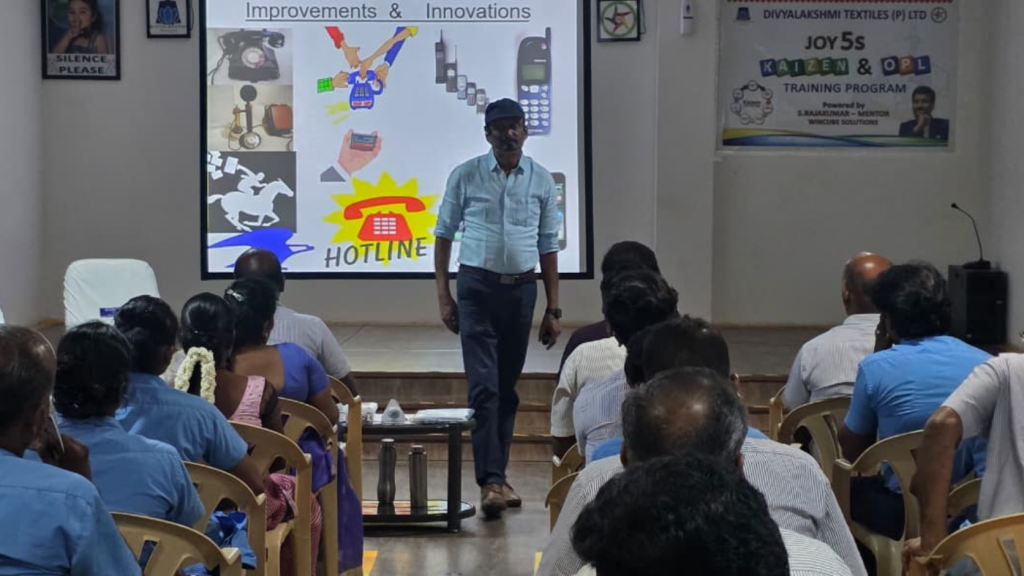
This program bridges the gap between theoretical knowledge and real-time industrial application, making the kaizen workshop for textile industry highly practical and result-oriented for manufacturing environments.
Objectives of the Kaizen Workshop
The primary goals of a kaizen workshop for textile industry are centered around enhancing operational efficiency while fostering a strong mindset of continuous improvement across all levels of the organization..
Key objectives include:
- Enhancing productivity across production lines
- Reducing wastage of time, material, and resources
- Improving product quality and consistency
- Encouraging employee involvement in improvement activities
- Developing problem-solving skills at all levels
By attending a kaizen workshop for textile industry, organizations gain a structured approach to identifying inefficiencies and implementing practical solutions.
Why Kaizen is Important for the Textile Sector
The textile industry operates in a highly competitive environment where even small inefficiencies can lead to significant losses. Unplanned machine stoppages, production defects, and inefficient workflow management can significantly impact overall profitability.
A kaizen workshop for the textile industry is important because it introduces simple yet powerful techniques to solve these issues. It helps organizations focus on eliminating waste (Muda), improving workflow, and increasing machine utilization.
In textile manufacturing, where production is continuous and high-volume, implementing the learnings from a kaizen workshop for textile industry can result in noticeable improvements in output and efficiency.
Key Topics Covered in the Workshop
A kaizen workshop for textile industry covers a wide range of practical and industry-relevant topics designed to improve overall manufacturing performance.
Key topics include:
- Introduction to Kaizen principles and philosophy
- 5S methodology for workplace organization
- Identification and elimination of waste (Muda)
- Continuous improvement techniques
- Real-time case studies from textile industries
Each session in the kaizen workshop for textile industry is designed to be interactive, allowing participants to relate concepts directly to their work environment.
Emerging Trends in Textile Manufacturing
Modern textile manufacturing is evolving rapidly with the integration of technology and lean practices. A kaizen workshop for textile industry also introduces participants to emerging trends shaping the future of the industry.
Some key trends include:
- Automation in production processes
- Digital monitoring of machines and workflows
- Lean manufacturing integration with technology
- Smart factory concepts
- Data-driven decision-making systems
Understanding these trends during a kaizen workshop for textile industry helps companies stay competitive and future-ready in a global market.
Practical Applications of Kaizen in Textile Industry
One of the strongest advantages of a kaizen workshop for textile industry is its focus on practical implementation. Participants learn how Kaizen principles can be applied directly on the shop floor.
Practical applications include:
- Reducing machine downtime through better maintenance practices
- Improving stitching line efficiency and balancing workloads
- Minimizing defects in garment production
- Enhancing inventory control systems
- Implementing 5S for better workplace organization
A kaizen workshop for textile industry ensures that these improvements are not theoretical but actionable and measurable in real production environments.
Benefits for Operators, Middle Management & Top Management
A kaizen workshop for textile industry is designed to benefit all levels of employees within an organization.
Operators:
Operators gain better clarity on workflow processes and learn how small improvements can make their work easier and more efficient.
Middle Management:
Middle managers learn how to monitor production, reduce inefficiencies, and ensure smooth coordination between teams.
Top Management:
Top leadership benefits from improved profitability, reduced operational costs, and enhanced productivity across departments.
Overall, a kaizen workshop for textile industry creates alignment across all levels of the organization.
Expected Outcomes of the Workshop
Organizations participating in a kaizen workshop for textile industry can expect measurable improvements in multiple areas.
Expected outcomes include:
- Increased production efficiency
- Reduced operational waste
- Improved product quality
- Better employee engagement
- Development of a continuous improvement culture
By implementing the techniques learned in a kaizen workshop for textile industry, companies can achieve long-term operational excellence.
Why Choose Wincube Solutions for Kaizen Training?
1. Industry-Focused Expertise
Wincube Solutions specializes in manufacturing excellence and lean methodologies, ensuring that every kaizen workshop for textile industry is aligned with real industrial requirements.
2. Practical, Hands-On Training Approach
Instead of theory-heavy sessions, the focus is on real-time shop floor applications, making improvements easy to implement immediately after the workshop.
3. Proven 5S & Lean Implementation Methods
Wincube Solutions has strong expertise in 5S, Kaizen, and lean manufacturing systems that directly improve productivity and reduce operational waste.
4. Customized Training for All Levels
From operators to top management, the training is designed to suit every level of the organization, ensuring complete participation and understanding.
5. Focus on Measurable Business Results
Every kaizen workshop for textile industry conducted by Wincube Solutions is aimed at delivering measurable improvements in efficiency, quality, and cost reduction
FAQs
1. What is a Kaizen workshop for textile industry?
It is a training program that teaches continuous improvement techniques to enhance productivity, quality, and efficiency in textile manufacturing.
2. Who can attend this Kaizen workshop?
Operators, supervisors, middle management, and top-level managers in textile industries can attend the workshop.
3. How does Kaizen improve textile manufacturing?
Kaizen helps reduce waste, improve machine efficiency, enhance workflow, and increase overall productivity.
4. Is Kaizen suitable for small textile units?
Yes, Kaizen is highly effective for both small and large textile units as it focuses on simple, practical improvements.
5. What are the main benefits of attending this workshop?
Participants gain knowledge on process improvement, waste reduction, efficiency enhancement, and building a continuous improvement culture.
Conclusion – Building a Culture of Continuous Improvement
The success of any textile organization depends on its ability to adapt, improve, and innovate continuously. Kaizen provides a simple yet powerful framework to achieve this transformation.
A kaizen workshop for textile industry is not just a training session—it is a step toward building a culture where every employee contributes to improvement. When implemented effectively, it leads to higher efficiency, reduced costs, and improved competitiveness in the global market.
By participating in a kaizen workshop for textile industry, organizations take an important step toward sustainable growth and operational excellence.